

How To Choose The Right Tripod Heads
The tripod head is the part of your support system that decides whether a setup feels controlled or fussy. It sits between your camera, lens, and the legs, and it affects framing, stability, and how quickly you can move without losing the shot. If the head is wrong for the work, even a solid tripod can feel like a compromise.
Quick Answer
Choose a tripod head based on the type of photography you do most often, the weight of your camera-and-lens combination, and how much adjustment you need in the field. For general stills, a ball head is usually the most practical. For video, a fluid or damped head is often better. For studio, architecture, product, or other precision work, a pan-tilt or geared head can be worth the extra time.
Table of Contents
- Quick Answer
- Our Top Picks
- Start With the Load: Camera, Lens, and What You Actually Carry
- Ball Heads: Fast, Versatile, and Usually the Default
- Fluid Heads: When Smooth Motion Matters More Than Speed
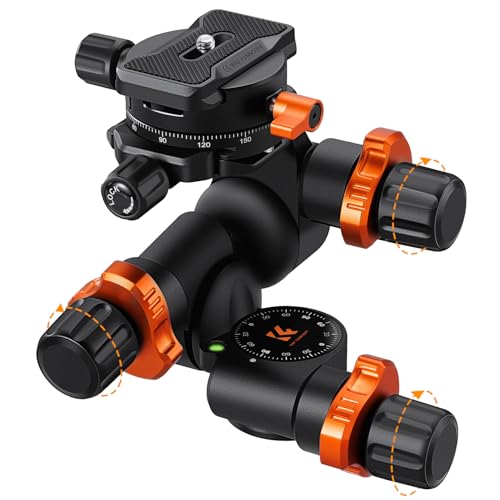
- Pan-Tilt and Geared Heads: Precision Work Needs Independent Axes
- Gimbal Heads: Built for Long Lenses and Moving Subjects
- Frequently Asked Questions
- Sources & References
Our Top Picks
Affiliate disclosure: if you buy through these links, we may earn a commission at no extra cost to you.


Start With the Load: Camera, Lens, and What You Actually Carry
Before choosing a head type, figure out what it will actually support. A compact mirrorless body with a standard zoom is a very different load from a full-frame body paired with a 70–200mm lens, a telephoto prime, or a studio light stand adapter. The head has to hold the camera steady, but it also has to work with the way you move it. If the setup is heavy, the locking mechanism matters more. If it is light, ergonomics and speed can matter more than raw capacity.
A useful rule is to leave a margin between your real load and the head’s stated limit. That margin gives you room for accessories such as an L-bracket, a cage, a microphone, a small monitor, or a longer lens than the one you usually use. It also helps when you are working in cold weather, on a soft surface, or with a tripod that is not perfectly rigid. A head that is constantly near its limit can feel less secure, even if it technically supports the weight.
Do not forget the bag. If the head does not fit the bag you already use, or if it makes the whole kit too bulky to carry, it will not get used. A smaller, lighter head that you take on every shoot is more useful than a larger, more capable one that stays in a drawer. The best head is the one that matches the work you do, not the one with the most impressive spec sheet.
Ball Heads: Fast, Versatile, and Usually the Default
Ball heads are the most common choice for general photography because they let you move the camera in multiple directions with one knob. That makes them useful when you are adjusting angle, tilt, and framing quickly, especially in the field. A good ball head should let you position the camera, lock it, and start shooting without fiddling. If you do a lot of travel, street, landscape, or event work, this speed is a real advantage.
The trade-off is precision. A ball head is excellent for getting close to the shot, but it can be harder to make tiny, repeatable adjustments. If you need the horizon to stay perfectly level, or you are doing work where small changes matter, you may need to spend more time fine-tuning. Some ball heads include leveling bases or bubble levels to help, but the basic design is still about fast positioning rather than micro-adjustment.
For still photography, a ball head is often the best starting point because it covers a wide range of situations without requiring a separate head for every task. It works well with standard lenses, larger bodies, and mixed shooting days. It is also usually easier to use when you are moving quickly, such as when you are repositioning for a portrait, adjusting a landscape frame, or switching between vertical and horizontal orientation.
Fluid Heads: When Smooth Motion Matters More Than Speed
Fluid heads are built for controlled movement, especially panning. They use damping to resist sudden jerks, which makes them useful for video work where smooth motion is part of the image. If you are shooting b-roll, interviews, or any footage where the camera moves as part of the shot, a fluid head can make the difference between a clean move and a shaky one. It is less about getting the camera into position quickly and more about keeping the motion steady while you move it.
The downside is that fluid heads are usually less convenient for stills. They can feel slower, heavier, and more deliberate. If your primary work is still photography, a fluid head may be overkill unless you also shoot a lot of video. It can also be less practical when you need to change angle quickly or work in tight spaces. For mixed-use kits, the question is whether video is frequent enough to justify the added weight and setup time.
Fluid heads are most useful when the camera movement itself is part of the final image. That includes tracking shots, slow pans, and any work where the camera is moving while recording. If you are shooting drones, the aerial gimbal handles stabilization in the air, but a fluid head can still be valuable for ground-based b-roll, product video, or interview setups where smooth pans are needed.
Pan-Tilt and Geared Heads: Precision Work Needs Independent Axes
Pan-tilt and geared heads are for work where small, controlled adjustments matter. Instead of moving the camera in one free motion, they give you separate controls for different directions. That makes them useful in studio, product, architecture, real estate, still life, macro, and focus stacking work, where you may need to move the camera a few millimeters or adjust one axis without changing another. The setup is slower, but the control is more precise.
A geared head takes this further by using gears to make fine adjustments easier. That is helpful when you are doing repeatable shots, aligning multiple frames, or working with lighting equipment where a small shift can change the result. If you are shooting product photography, for example, a geared head can make it easier to keep the camera in exactly the same position while you adjust the product, lights, or background. It is less about speed and more about consistency.
These heads are not usually the best choice for fast fieldwork. They add weight, complexity, and setup time. If you are constantly moving, repositioning, or shooting in changing conditions, the extra controls can become a burden. But if your work depends on repeatable framing, precise alignment, or controlled movement, a pan-tilt or geared head can be worth the trade-off.
Gimbal Heads: Built for Long Lenses and Moving Subjects
Gimbal heads are designed to balance heavier setups, especially long telephoto lenses. The support is usually mounted to the side of the lens rather than directly under the camera body, which can make the setup feel more stable when you are tracking moving subjects. That makes them useful for wildlife, sports, bird photography, and other work where the lens is a large part of the load. The goal is to reduce strain and keep the viewfinder or screen steady while you follow the subject.
The trade-off is that gimbal heads are more specialized. They are not as quick to reposition as a ball head, and they are usually less convenient for general shooting. If you rarely use long lenses or do not need to track moving subjects for long periods, a gimbal head may be more equipment than you need. It is a tool for a specific job, and it works best when that job is a regular part of your shooting.
Gimbal heads can also be more complex to balance. The setup requires attention to the lens position, the weight of the camera, and the way the rig moves. If it is balanced well, it can feel much more controlled. If it is not, it can become cumbersome. For photographers who shoot a lot of telephoto work, that added setup time can be worth it. For everyone else, it may be better to wait until the need is clear.
Frequently Asked Questions
What is the most practical tripod head for general photography?
A ball head is usually the most practical for general stills because it is fast, versatile, and easy to use with a wide range of camera and lens combinations. It is a good default if you do travel, street, landscape, portrait, or event work and need to reposition quickly.
Do I need a fluid head if I mostly shoot stills?
Not usually. A fluid head is most useful when smooth panning is part of the final image, especially in video. If you only occasionally shoot b-roll, a basic ball head may be enough unless you are doing a lot of controlled camera movement.
When is a geared head worth the extra cost?
A geared head is worth considering when you need precise, repeatable adjustments, such as in studio, product, architecture, macro, or focus stacking work. It is less useful for fast fieldwork, where speed and simplicity matter more.
Can a tripod head affect image quality?
Indirectly, yes. A head that is too light, poorly locked, or difficult to control can make it harder to keep the camera steady, level, or in the same position between shots. That can affect sharpness, framing, and consistency, especially with long exposures, long lenses, or repeatable studio setups.
Does a tripod head matter for drone photography?
For the drone itself, the aerial gimbal handles stabilization. But a tripod head can still matter for ground-based shots, b-roll, or when you are using a separate camera for the same location. If you are shooting both aerial and ground footage, the head choice for the ground camera should match the type of movement you want.
How important is the quick-release plate?
Very important. The plate is part of the connection between the camera and the head, and it affects how securely the camera sits, how quickly you can swap bodies or lenses, and whether the setup works with your bracket or cage. A compatible, well-made plate can make a big difference in day-to-day usability.
The right tripod head is not the most expensive one or the one with the most features. It is the one that matches your camera load, your shooting style, and the kind of control you need in the field. If you mostly shoot stills, start with a ball head. If you shoot a lot of video, look at fluid damping. If your work depends on precision, consider pan-tilt or geared controls. The best next step is to identify the three or four setups you use most often, then choose a head that handles those setups without making the rest of your kit harder to carry.


