

Lenses Vs Camera Bags Which Should You Buy
Let’s be honest for a second. Comparing a lens to a camera bag is like comparing a tire to a trunk. One is the engine of your creative output; the other is the vessel that keeps your engine from rattling apart on the way to the shoot. Yet, every year, photographers—especially those on a budget—find themselves staring at an empty bank account and a gear list, wondering which purchase will actually improve their portfolio. Is it the sharpness of a new prime lens, or the peace of mind of a bag that doesn’t leak when it rains?
This article isn’t about pretending these categories are equivalent. They aren’t. A lens is a precision optical instrument; a bag is a piece of luggage. But in 2026, with gear becoming increasingly specialized and expensive, the decision of where to allocate your next few hundred dollars is critical. Are you solving an image quality problem, or are you solving a logistics problem? Let’s break down what actually matters when you’re standing in the checkout line.
Affiliate disclosure: if you buy through these links, we may earn a commission at no extra cost to you.

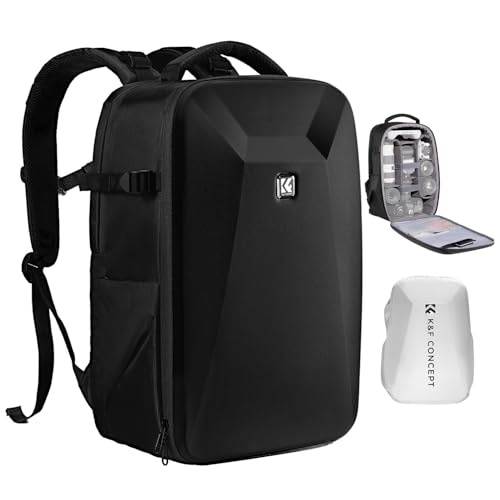

Table of Contents
Models in this comparison
Affiliate disclosure: if you buy through these links, we may earn a commission at no extra cost to you.
Quick Verdict
Choose Lenses if...
- Your current glass is soft, slow, or limiting your creative range (e.g., you can't get bokeh or reach subjects).
- You shoot in challenging light where aperture speed (f/1.8 vs f/5.6) dictates your ISO and shutter speed.
- You already own a protective, weather-sealed bag that has held up for more than a year.
Choose Camera Bags if...
- Your current bag is a generic backpack with no dividers, putting your gear at risk of impact damage.
- You are transitioning from casual shooting to professional work where speed of access and organization matter.
- You plan to hike or travel long distances, requiring ergonomic weight distribution to prevent fatigue.
| Factor | Lenses | Camera Bags |
|---|---|---|
| Impact on Image Quality | Direct. Determines sharpness, bokeh, and low-light performance. | Indirect. Protects the sensor and optics from dust, impact, and moisture. |
| Cost Efficiency | High entry cost for quality glass (e.g., Canon RF100-400mm). Diminishing returns on budget primes. | Low-to-mid cost for high utility. A $100 bag can save a $2,000 camera. |
| Learning Curve | Steep. Requires understanding focal lengths, aperture, and focus modes. | Low. Mainly organizational habits and packing strategies. |
| Durability & Wear | Optical elements can scratch; mechanical parts wear out. Hard to repair cheaply. | Zippers fail, fabric wears, dividers shift. Easily replaced or repaired. |
| Portability & Ergonomics | Heavier lenses cause fatigue. Balance changes with body size. | Determines comfort. A bad bag ruins a good day; a good bag saves your back. |
| Best For | Creative expression, technical control, and overcoming physical limitations of light/distance. | Logistics, safety, workflow efficiency, and transport. |
About Lenses
Lenses are the soul of the system. You can have the best body in the world, but if you’re shooting through a kit zoom at f/5.6 in a dim room, you’re fighting physics and losing. When we talk about lenses in 2026, we’re often talking about the trade-off between reach and speed. Take the Canon RF100-400mm F5.6-8 IS USM Telephoto Lens. It’s a marvel of engineering—lightweight, versatile, and capable of pulling distant subjects close. But that variable aperture means you’re often pushing ISO higher than you’d like. On the other end of the spectrum, the Canon RF50mm F1.8 STM or the classic EF 50mm f/1.8 STM offers that creamy background separation and low-light capability that makes portraits pop. These aren't just tools; they're creative filters.
The reality of buying lenses is that they are high-stakes investments. A scratch on a front element can ruin a shot; a decentered lens can ruin a career. They require careful handling, which ironically leads us back to bags. But the payoff is immediate. When you swap from a kit lens to a fast prime, you don't just get a sharper image; you get a different emotional response from your viewer. The depth of field control, the ability to isolate a subject from a chaotic background—this is where the art happens.
About Camera Bags
A camera bag is not a backpack. If you think it is, you’re going to break your gear. Dedicated camera bags, like the K&F CONCEPT Camera Backpack or the MOSISO DSLR/SLR/Mirrorless bag, exist because cameras and lenses are irregularly shaped, heavy, and fragile. They need padded, configurable dividers to keep glass from knocking against metal. The Vanguard VEO Metro B25L, for instance, is highlighted for its well-padded harness, recognizing that if you can’t carry it comfortably, you won’t carry it at all.
The market has evolved beyond simple protection. We now have bags designed for specific workflows. The K&F CONCEPT 2-in-1 Sling Bag features a convertible design that switches between a sling and a shoulder bag, offering versatility for street photographers who need speed. It includes a quick side-access panel for fast camera retrieval and a dedicated tripod holder with secure straps. For the hiker, the Shimoda Explore 40 is identified as the best hiking camera bag and best budget option, balancing weight with protection. For the urban professional, the Peak Design Everyday Backpack 20L is identified as the best option for design, blending into city life while protecting gear. The Lowepro ProTactic 450 AW II is identified as the best option for protection, scoring a 4.8 out of 5 for protection according to BestPick Guide. The right bag changes how you work.
Head-to-Head: Workflow Efficiency
When you’re shooting events or street photography, seconds matter. A lens doesn’t help you grab your camera faster; a bag does. Shoulder bags provide an access speed advantage for street photography, events, and documentary work because you can swing the bag to the front and reach the camera without putting it down. This ergonomic advantage is real. If you’re fumbling with a top-loading backpack while a subject walks away, you’ve lost the shot. A well-designed bag, like the Tenba DNA 15 (identified as the best shoulder bag), allows for one-handed access that keeps you engaged with the scene.
Conversely, a lens affects workflow in terms of decision-making. Do you stop to change lenses, or do you keep shooting with the one you have? A versatile zoom like the Hybrid Telephoto Zoom or the Canon RF100-400mm reduces the need to swap glass, keeping you in the flow. But if you’re stuck with a slow lens in low light, you might be forced to stop and change, breaking your momentum. In this sense, the right lens buys you time by reducing the need to fiddle with settings or swap gear.
Head-to-Head: Risk and Protection
Let’s talk about the elephant in the room: what happens when you drop your gear. A lens is a precision instrument. If you drop a Canon RF50mm F1.8 on concrete, the internal elements can shift, the mount can bend, and the lens is effectively dead. Repair costs often exceed the value of budget lenses. A camera bag, however, is your insurance policy. Quality camera bags use adjustable soft dividers to protect equipment while allowing custom configurations, whereas cheap bags often use fixed foam dividers that waste space. If you’re carrying a $2,000 lens in a $30 generic backpack, you’re gambling. The Lowepro ProTactic 450 AW II, with its 4.8/5 protection score, is built to absorb that impact. Investing in a bag is investing in the longevity of your lenses.
Weather is another factor. Lenses are generally not weather-proof unless specified (and even then, seals degrade). A bag is your first line of defense against rain, dust, and sand. The Shimoda Explore 40, praised for its hiking utility, likely handles dust and grit better than a lens left exposed. If you shoot in coastal or desert environments, the bag’s weather resistance is more critical to the survival of your gear than the lens’s own weather sealing.
Head-to-Head: Cost and Value
Here is the hard truth: a good lens is expensive, and a good bag is affordable. You can buy a Canon EF 50mm f/1.8 STM for a fraction of the cost of a professional telephoto, and it will still give you that classic "nifty fifty" look. However, you can buy a high-quality bag like the Wandrd Prvke V4 21L (which received an all-round score of 4.6 out of 5) for less than many entry-level lenses. The ROI on a bag is immediate: it stops you from breaking your existing gear. The ROI on a lens is potential: it allows you to capture images you couldn’t before.
Consider the K&F CONCEPT Camera Backpack. It’s lightweight, functional, and likely costs less than a mid-range prime lens. If your current bag is a grocery tote, buying the K&F bag is the highest-value purchase you can make. It protects the investment you’ve already made. If you already have a solid bag, then the next marginal dollar is better spent on glass. The sequence matters: protect what you have, then upgrade what you use.
Who Should Choose Lenses?
Choose lenses if you are hitting technical limits. If your images are soft, noisy, or lack the depth you want, your bag isn’t the problem. If you’re a portrait photographer who needs f/1.8 separation, buy the Canon RF50mm F1.8 STM or the EF 50mm f/1.8 STM. If you’re a wildlife or sports shooter who needs reach, the Canon RF100-400mm F5.6-8 IS USM is your ticket. These purchases directly alter the pixels you capture. If you’re shooting for clients who demand sharpness and specific aesthetic qualities, glass is the priority.
Who Should Choose Camera Bags?
Choose a camera bag if you are a traveler, a hiker, or a professional who carries multiple bodies and lenses. If you’re moving from hobbyist to pro, you need the reliability of the Lowepro ProTactic 450 AW II or the ergonomic comfort of the Vanguard VEO Metro B25L. If you’re a street photographer who needs speed, the K&F CONCEPT 2-in-1 Sling Bag or the Tenba DNA 15 will change how you work. If your current bag is a generic backpack, stop everything and buy a dedicated camera bag. It’s the cheapest insurance you’ll ever buy.
Our Verdict
If you are starting out and have only one bag (a generic one), buy the camera bag first. You cannot create if your gear is broken. The risk of damaging your existing lens/body outweighs the creative gain of a new lens. Once you have a bag that protects your gear and fits your workflow (like the Shimoda Explore 40 for hikers or the Peak Design Everyday Backpack 20L for urban shooters), then you can responsibly invest in lenses. For most working photographers, the bag is the unsung hero of the kit. It’s not sexy, but it’s essential. Buy the bag. Then buy the lens.
Frequently Asked Questions
Can I use a regular backpack for my camera?
Technically, yes. Practically, no. Regular backpacks lack the padded, configurable dividers that keep heavy lenses from knocking into each other or your camera body. Dedicated bags like the K&F CONCEPT or MOSISO models are designed specifically to prevent this impact damage.
Is a 50mm f/1.8 lens worth it over a kit zoom?
Yes, if you shoot portraits or low-light scenes. The f/1.8 aperture allows for much better background separation (bokeh) and lets you shoot at lower ISOs in dim environments. The Canon RF50mm F1.8 STM and EF 50mm f/1.8 STM are excellent entry points for this creative control.
What is the best bag for hiking?
According to BestPick Guide, the Shimoda Explore 40 is identified as the best hiking camera bag and best budget option. It balances weight, capacity, and protection for long treks. The Vanguard VEO Metro B25L is also highlighted for its well-padded harness, which is crucial for comfort over long distances.
Do expensive lenses last longer than cheap ones?
Generally, yes. Premium lenses use better weather sealing, more durable mechanical components, and higher-quality glass coatings. However, even a premium lens will fail if dropped. That’s why the protection offered by a bag like the Lowepro ProTactic 450 AW II (with a 4.8/5 protection score) is critical for the longevity of any lens.
Should I buy a sling bag or a backpack?
It depends on your workflow. Shoulder/sling bags provide an access speed advantage for street photography and events because you can swing them to the front quickly. Backpacks are the correct choice for hiking and travel photography where you walk long distances because they distribute weight across both shoulders, despite slower access times.


