

Lenses vs Tripods: Which Should You Buy in 2026
By Lensvaultlab Editorial
If you are standing in front of a half-empty savings account and a half-empty camera bag, the question is never really “lens or tripod?” It is “which weakness is costing you the most shots right now?” A lens changes what you can see, how much light you can gather, and how much separation you can get from a scene. A tripod changes whether that shot survives the wind, the long exposure, the shaky hands, or the moment the ground gets soft. Both can be the difference between a good file and a file you delete without a second thought. This comparison is for photographers who already own a working camera and are trying to decide where the next dollar should go: into glass that expands creative control, or into support that makes the existing gear usable in the field.
One limitation matters before anything else: a lens and a tripod are not equivalent purchases. A lens is an optical component that changes image quality and shooting options. A tripod is a support system that changes stability and usability. Because the scopes are different, cost comparisons only make sense when you specify the exact model, mount, size, and load. This article does not use source-bound cost data, so it will not pretend that “a $500 lens” and “a $500 tripod” solve the same problem. They do not. They solve different problems, and the right answer depends on what you are actually trying to shoot.
Affiliate disclosure: if you buy through these links, we may earn a commission at no extra cost to you.


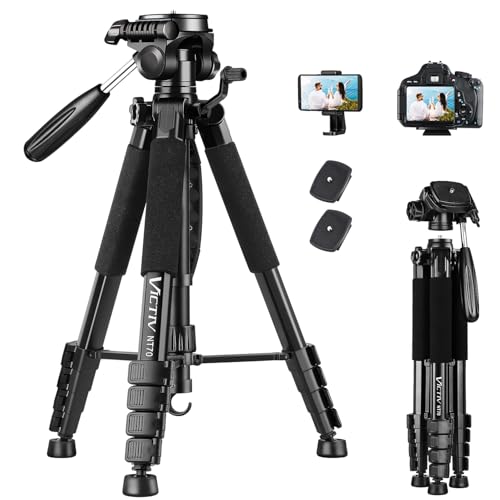

Table of Contents
- Models in this comparison
- Quick Verdict
- About Lenses
- About Tripods
- Head-to-Head: Image Quality Impact
- Head-to-Head: Real-World Usability
- Head-to-Head: Longevity and Flexibility
- Who Should Choose Lenses?
- Who Should Choose Tripods?
- Our Verdict
- Frequently Asked Questions
- Sources & References
- Relevant Products for This Topic
Models in this comparison
Affiliate disclosure: if you buy through these links, we may earn a commission at no extra cost to you.
Quick Verdict
Choose Lenses if...
- Your current glass limits your subject: too narrow, too slow, too soft, or too heavy for the work you keep trying to do.
- You want sharper images, better low-light reach, cleaner background separation, or more control over compression and framing.
- You shoot handheld most of the time and can live with a modest support system for the occasional steady shot.
Choose Tripods if...
- You are regularly shooting long exposures, night scenes, landscapes, or telephoto work where camera shake is the main enemy.
- Your current support is too light, too short, or too flexible for the body and lens you actually carry.
- You need a stable platform for video, timelapse, studio work, or repeated framing where small movements matter.
| Factor | Lenses | Tripods |
|---|---|---|
| Relative Cost (source-bound only) | No source-bound cost data is used here. Cost depends heavily on focal length, aperture, mount, and optical design. | No source-bound cost data is used here. Cost depends heavily on load rating, leg tube thickness, material, head type, and packed size. |
| Best For | Expanding creative control: focal length, aperture, depth of field, subject isolation, low-light reach, and image quality. | Stability: long exposures, wind resistance, repeated framing, video work, and keeping heavier setups from drifting or vibrating. |
| Setup Difficulty | Usually low: mount it, focus, shoot. The complexity is in choosing the right focal length and aperture, not in assembling it. | Higher: leg spread, head leveling, load balance, column height, and wind exposure all affect how usable the setup is. |
| Reliability | Depends on optical performance, autofocus behavior, build quality, weather resistance, and how well the lens matches the mount. | Depends on load capacity, leg tube thickness, head torque control, lock tightness, and how well the system handles the actual gear weight. |
| Key Advantage | A better lens can make a modest camera body produce noticeably better images and open up subjects you could not shoot before. | A proper tripod can make an existing camera and lens produce images that were impossible to get by hand, especially in low light or wind. |
| Main Drawback | Great glass can still produce soft files if the platform is unstable, the focus is wrong, or the subject is moving faster than the system can track. | A tripod does not improve the optics. If the lens is the wrong tool for the job, a stable platform only makes the wrong image sharper. |
About Lenses
A lens is the part of the system that actually forms the image. It determines focal length, maximum aperture, subject compression, depth of field, and how much light reaches the sensor. In daily shooting, that matters more than most people admit until they are stuck with the wrong tool. A fast prime can turn a dim interior into a workable scene. A long telephoto can pull a distant subject into a usable frame. A wide zoom can let you hold a composition while the light changes. The lens is where creative control lives, and that is why it is often the first upgrade a working photographer wants.
The real questions are practical. Does the lens cover the focal lengths you use most? Is it sharp enough at the apertures you actually shoot? Does it focus fast enough for the subject? Is it comfortable to balance on the body, or does it make the camera feel like it wants to fall off a table? Build quality matters, but not in the abstract. A lens that is heavy, long, or awkward in the rain can change how often you want to carry it. A lens that is fast and sharp but too slow to focus for your subject is a beautiful object, not a working tool. If your current glass is the thing making you compromise on framing, exposure, or subject choice, the lens is the upgrade that changes the image most directly.
Lenses also have a longer shelf life than many photographers expect. A good focal length does not go out of style because a new sensor came out. A 35mm, 50mm, 85mm, 70-200mm, or 100-400mm range can still be useful years later, provided the mount and autofocus system remain compatible with your workflow. That makes lenses a different kind of purchase than support equipment. You are not just buying a piece of gear; you are buying a way of seeing. If the way of seeing is wrong for the work you do, no amount of stable support will fix the composition.
About Tripods
A tripod is not about making your camera look professional. It is about control. It controls shake, drift, vibration, and the small movements that ruin a long exposure or make a telephoto shot softer than it should be. In the field, a tripod is judged by how it behaves under real conditions: wind, uneven ground, a heavy lens, a cold hand, and a subject that does not care how careful you are being. If the platform is too light, the shot will suffer. If the head cannot hold torque, the camera will creep. If the legs are too thin for the load, the whole system becomes a question mark.
Stability for heavier lenses is not a brand story. It is a mechanical story. Leg tube thickness, load capacity, head torque control, and the total weight of the body plus lens all matter. FindingDulcinea reports that a standard kit tripod rated for 6 pounds can flex, vibrate, and eventually tip under a full-frame camera body plus a telephoto lens weighing more than 5 pounds. That is the kind of mismatch that shows up in the field as soft files, missed framing, and a growing suspicion that the camera is broken when the real problem is the platform. FindingDulcinea also says heavy-lens tripod setups should have a load capacity that is at least double the total gear weight. That is a useful rule because it gives the system room to handle wind, uneven ground, and the torque of a long lens without living on the edge.
Tripods also change workflow. A good one lets you set up quickly, level the camera, and trust the head to stay where you put it. A bad one turns every shot into a negotiation with the hardware. Packed size matters if you walk far. Height matters if you do not want to crouch. Material matters if you are carrying the system all day. The head matters more than people think: a cheap tripod with a good head can be better than an expensive tripod with a head that drags, slips, or cannot lock tight. If your current support is the reason you are not shooting certain scenes, the tripod is the upgrade that unlocks the camera you already own.
Head-to-Head: Image Quality Impact
A lens has a direct effect on image quality. It controls optical sharpness, contrast, color rendition, aberration control, and how the image falls on the sensor. If the lens is soft, poorly corrected, or the wrong focal length for the subject, the final image will show it. A tripod has an indirect but powerful effect: it can prevent the image from being degraded by camera shake. A sharp lens on an unstable platform can still produce a soft file. A modest lens on a stable platform can produce a clean, usable image when handheld shooting would not.
The practical difference is this: a lens determines the ceiling of what the image can look like, while a tripod helps you reach the ceiling that the lens and camera already have. If your current files are soft because of motion, the tripod may be the faster fix. If your files are limited because the lens cannot give you the aperture, focal length, or optical performance you need, the lens is the better investment. In many cases, the lens is the more obvious upgrade because it changes the image itself. But in long-exposure, telephoto, night, or video work, the tripod can be the difference between a sharp file and a file that looks like it was taken through a window.
Head-to-Head: Real-World Usability
Lenses are generally easier to use in the field. You mount them, focus, and shoot. The usability questions are about balance, size, weather resistance, and how quickly the lens adapts to changing conditions. A lens that is too heavy can tire you out. A lens that is too long can make the camera awkward to carry. A lens that is slow to focus can cost you a moving subject. These are real usability issues, but they are usually manageable if the lens matches the way you shoot.
Tripods are more involved. You have to set them up, level them, balance the load, and make sure the head can hold the camera without creeping. In wind, a tripod that looks stable in the shop can become a problem in the field. FindingDulcinea’s 2026 heavy-duty tripod testing included telephoto setups, which is a useful reminder that generic tripod specs do not tell the whole story. The real test is whether the system can handle the actual combination of body, lens, wind, and exposure time. If you shoot mostly handheld, a tripod may be a convenience. If you shoot long exposures or heavy telephoto work, it is not a convenience; it is part of the imaging system.
Head-to-Head: Longevity and Flexibility
Lenses tend to age well because focal length and aperture are durable creative tools. A good prime or zoom can remain useful across camera bodies, styles, and shooting conditions. The main risk is mount compatibility and autofocus performance, but a well-chosen lens can serve a photographer for years. That makes lenses a strong choice when you want an upgrade that expands what you can shoot, not just how steadily you can shoot it.
Tripods also age well, but for different reasons. A sturdy tripod with good leg tubes and a reliable head can last for a long time, especially if it is sized correctly for the gear you carry. The risk is buying support that is too light for the lens you already own or the lens you are about to buy. A tripod that works for a compact camera may not work for a full-frame body with a long telephoto. A tripod that is fine for travel may be too short or too flexible for studio, video, or heavy landscape work. The best tripod is not the most expensive one; it is the one that matches the load, the height, and the way you use it.
Who Should Choose Lenses?
Choose a lens if your current glass is the bottleneck. That is the clear case. If you are constantly wishing you had a longer reach, a faster aperture, a wider field of view, or better optical performance, the lens is the upgrade that changes the image most directly. It is also the better choice if you shoot mostly handheld, do not need long exposures, and your current support is adequate for the gear you carry. A lens can make a modest camera body produce better work, and it can open up subjects that were previously out of reach. If your creative limitations are optical, buy the lens.
Who Should Choose Tripods?
Choose a tripod if stability is the bottleneck. If you are missing sharpness in low light, struggling with long exposures, working in wind, shooting video, or using a body and lens combination that is too heavy for your current support, the tripod is the better first buy. It is also the right choice if you already have the right lens but are not getting the results you expected because the platform is too light or too unstable. A tripod does not make a bad lens good, but it can make a good lens work as it was meant to. If your limitations are mechanical rather than optical, buy the tripod.
Our Verdict
Buy the lens first if you need more creative control. Buy the tripod first if you need more stability. If you have to pick one and your current lens is the wrong tool for the work you keep trying to do, the lens is the stronger purchase because it changes the image itself. But if you already have the right lens and your files are being ruined by shake, wind, long exposures, or an under-rated support system, the tripod is the smarter buy. In 2026, the honest answer is not “lenses are better” or “tripods are better.” The answer is: buy the component that removes the biggest limitation in your current workflow. If your limitation is what you can see, buy glass. If your limitation is whether the shot stays still, buy support.
Frequently Asked Questions
Should I buy a new lens before a new tripod?
Yes, if the lens is limiting your subject, focal length, aperture, or image quality. A lens changes what you can shoot and how it looks. A tripod is the better first buy if your current support is causing softness, drift, or missed framing, especially in long exposures, wind, or telephoto work.
Can a good tripod make a cheap lens look better?
It can make the lens perform at its full potential by removing camera shake. It will not fix optical flaws, poor focus, wrong focal length, or bad exposure. A stable platform helps a good lens produce its best files, but it cannot turn a weak lens into a strong one.
How much load capacity does a tripod need?
For heavy lens setups, look for a load rating with room to spare. FindingDulcinea says heavy-lens tripod setups should have a load capacity that is at least double the total gear weight. That gives the system margin for wind, uneven ground, and the torque of a long lens without relying on the hardware to be perfect.
Is a lightweight travel tripod enough for a telephoto lens?
Not always. A light tripod may be fine for a compact camera and a short lens, but it can become unstable with a heavier body and telephoto combination. FindingDulcinea reports that a standard kit tripod rated for 6 pounds can flex, vibrate, and eventually tip under a full-frame body plus a telephoto lens weighing more than 5 pounds. If you shoot long telephoto work, the support needs to be sized for the actual load.
Which matters more: lens speed or tripod stability?
They solve different problems. Lens speed helps you gather light and control depth of field. Tripod stability helps you keep the image sharp when the exposure is long or the platform is exposed to motion. If you are limited by low light and depth of field, speed matters. If you are limited by shake, wind, or long exposures, stability matters.
Sources & References
Relevant Products for This Topic
As an Amazon Associate we earn from qualifying purchases at no extra cost to you.


