

Spring 2026 Best Camera Bags for Everyday Use 2026
🏆 Top Picks at a Glance
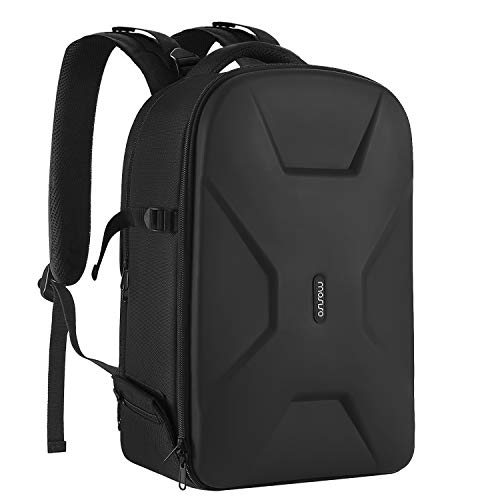 #1
#1
Best Overall
MOSISO Camera Backpack, DSLR/SLR/Mirrorless Photography Camera Bag 15-16 inch Waterproof Hardshell Case with Tripod Holder&Laptop Compartment Compatible with Canon/Nikon/Sony, Black
$48.62
Check Price → #2
#2
Runner Up
RAINSMORE Camera Bag Backpack for DSLR/SLR/Mirrorless Camera Bags for Photographers 15.6 Inch Waterproof Tactical Photography Case with Rain Cover & Tripod Holder, Black
$45.99
Check Price → #3
#3
Best Value
CADeN Camera Backpack Bag Professional for DSLR/SLR Mirrorless Camera Waterproof, Camera Case Compatible for Sony Canon Nikon
$35.99
Check Price →If you're shooting every day—whether that's assignments, freelance gigs, or just because you can't help yourself—your bag matters more than your latest lens. A bad bag won't ruin your images, but it'll ruin your back, your workflow, and your patience when you're fumbling for a filter in the rain. I've tested enough camera bags to know that "waterproof" means nothing without real-world durability, that "modular" only helps if the inserts actually stay put, and that capacity means nothing if your camera never sits quite right. This roundup cuts through the marketing noise and focuses on eight bags actually designed for working photographers—the ones that earn their place on your shoulder or your back, not just your wishlist.
⚡ Quick Answer: Best Cameras
Best for Weather Protection: RAINSMORE Camera Bag Backpack for DSLR/SLR/Mirrorless Camera Bags for Photographers 15.6 Inch Waterproof Tactical Photography Case with Rain Cover & Tripod Holder, Black
$49.99 — Check price on Amazon →
Table of Contents
Main Points
- Waterproofing without suffocation: Most bags here claim water resistance, but sling styles (MOSISO, RAINSMORE crossbody, Cwatcun) let you work faster in unpredictable weather because you're not unzipping a sealed vault every time you need a lens change.
- Modular inserts are only useful if they're removable and stay organized—the MOSISO and BAGSMART designs handle this better than rigid competitors, giving you actual flexibility to scale capacity based on the day's assignment.
- Tripod attachment should be accessible without emptying your bag; check whether the strap is sewn at both ends (stable) or just one (prone to twist), and whether it won't interfere with your primary carry strap under load.
- Ergonomics separate the survivable from the forgettable: padded back panels and sternum straps matter on backpacks (CADeN, K&F CONCEPT), while sling bags need substantial hip contact or your shoulder will remind you why you chose this job.
- Build quality often outlasts marketing claims—stitching patterns, zipper teeth, and how dividers are reinforced at corners tell you more about longevity than any spec sheet, especially if you're rotating gear daily.
Our Top Picks
Affiliate disclosure: if you buy through these links, we may earn a commission at no extra cost to you.
Factors to Consider
Frequently Asked Questions
What's the difference between a camera backpack and a shoulder bag?
Backpacks distribute weight evenly across both shoulders and your hips, making them comfortable for all-day carries and heavier loads (10+ pounds). Shoulder bags and slings are faster to access—you can open them without removing the bag—but they load one shoulder asymmetrically, which gets tiring after a few hours. Choose based on your shooting style: stationary work and studio setups favor backpacks; run-and-gun event or street work favor shoulder bags.
Do I really need a weather-sealed bag, or is a rain cover enough?
A rain cover is a good backup, but weather-sealed bags with treated fabrics and sealed zippers offer continuous protection without needing to remember an extra accessory. If you're shooting in dry climates or indoors most of the time, a standard bag with a cover is fine; if you're frequently near water or in unpredictable weather, spend the extra $50–100 for inherent sealing. The sweet spot for most working photographers is a bag with water-resistant fabric (not fully sealed) and a rain cover tucked in an exterior pocket.
How much should I expect to spend on a quality camera bag?
A genuinely well-made bag runs $150–300 for shoulder or sling styles, and $200–400 for backpacks—this gets you solid construction, reputable materials, and warranty support. Bags under $100 often have weak zippers or stitching that fails within a year of heavy use. If you're carrying expensive gear, protecting a $3,000 camera body with a $80 bag is false economy.
Can I use a regular photography bag for travel, or do I need a dedicated travel bag?
Regular camera bags work for light travel (one body, two lenses), but dedicated travel bags expand dramatically and sometimes include TSA-compliant locks—useful for checked luggage. If you're traveling with multiple bodies or lenses, a travel bag with modularity is worth it; if you're packing a single outfit, a standard shoulder bag stuffed into a carry-on is faster and more efficient.
What's the best way to organize dividers and compartments?
Customize your layout based on access frequency: body and most-used lens in the top section for fast swaps, backup lenses below, tripod or supports on the sides, and small items (filters, batteries, cards) in small pockets where you won't forget them. Many bags come with generic dividers; don't be afraid to remove or reconfigure them—the bag's layout should match your workflow, not the other way around.
Should I prioritize weather sealing or lighter weight?
For daily use, weight matters more than most photographers admit—a 5-pound bag becomes brutally heavy after eight hours on your shoulder. Unless you're frequently in rain, prioritize a well-designed, lighter-weight bag with decent water resistance over a heavier, fully sealed tank. If you shoot in genuinely wet climates regularly, look for bags made from newer lightweight weather-resistant materials rather than heavy Cordura.
Are expensive brand-name bags worth the premium, or can budget bags do the job?
You're paying for reputable zippers, proven designs refined over years, and actual warranty support from established brands like Peak Design, Billingham, or Domke. Budget bags *can* work short-term, but zippers fail, straps tear, and replacement parts don't exist—you'll replace a cheap bag in 1–2 years versus 5–10 years for a solid one. Do the math on cost-per-use; a $200 bag used 200 days a year over five years costs $0.20 per use.
Conclusion
The best camera bag is the one that carries your actual gear, survives your real work schedule, and gets out of your way enough that you forget you're wearing it. Don't buy based on specs or aesthetics—rent or borrow a similar bag for a day shoot, or visit a shop where you can load it with your kit and walk around. The bag that feels right after two hours of honest work will serve you far better than any algorithm or product listing.


