

Sandisk 64gb Memory Card Vs Sandisk 128gb Memory
If you’ve been keeping an eye on the market lately, you’ve likely noticed that buying memory cards in 2026 feels a bit different than it did a few years ago. Between the "Memory Tax"—where standard SD cards saw price increases of roughly 100% and professional models jumped as much as 300%—and the shift in NAND production toward high-bandwidth memory for AI servers, the decision between a 64GB and a 128GB SanDisk card isn't just about capacity anymore. It’s about managing your budget against shifting supply chains while ensuring your gear doesn't choke during a critical shoot.
This comparison isn't for the casual user looking to store a few thousand vacation snapshots. It’s for the working photographer, the wedding shooter, and the videographer who needs to know exactly how much headroom they have before a buffer clears or a write speed drops. We’re looking at the real-world trade-offs: Is the 64GB capacity enough to keep you mobile and cost-effective, or does the 128GB capacity provide the necessary buffer for modern 4K workflows? Let's break down which one actually makes sense for your kit.
Affiliate disclosure: if you buy through these links, we may earn a commission at no extra cost to you.

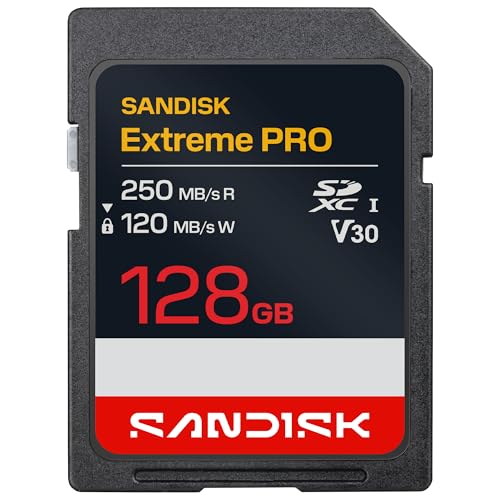
Table of Contents
- Models in this comparison
- Quick Verdict
- About Sandisk 64Gb Memory Card
- About Sandisk 128Gb Memory Card
- Head-to-Head: Capacity vs. Workflow Efficiency
- Head-to-Head: Speed, Buffer Clearing, and Sustained Writes
- Head-to-Head: Value and the "Memory Tax" Reality
- Who Should Choose Sandisk 64Gb Memory Card?
- Who Should Choose Sandisk 128Gb Memory Card?
- Our Verdict
- Frequently Asked Questions
- Sources & References
Models in this comparison
Affiliate disclosure: if you buy through these links, we may earn a commission at no extra cost to you.

Quick Verdict
Choose SanDisk 64GB Memory Card if...
- You are a casual user shooting everyday photography or travel vlogs where file sizes remain manageable.
- You need a cost-effective solution for devices like the Nintendo Switch or basic 4K consumer cameras.
- You prefer smaller, more frequent data offloads to minimize the risk of losing a massive amount of data in a single card failure.
Choose SanDisk 128GB Memory Card if...
- You shoot high-resolution RAW files or 4K video and need more headroom before hitting capacity limits.
- You want to minimize the frequency of swapping cards during a shoot or long-duration recording sessions.
- You are managing the "Memory Tax" pricing by opting for higher capacity to get better value-per-gigabyte in a volatile market.
| Factor | Sandisk 64Gb Memory Card | Sandisk 128Gb Memoryයක Card |
|---|---|---|
| Primary Use Case | Everyday photography, travel vlogs, and basic 4K video. | Professional workflows, longer 4K video shoots, and high-resolution RAW bursts. |
| Capacity Management | Easier to swap cards frequently to prevent data loss on a single card. | Holds more data, but requires more disciplined offloading to manage file volume. |
| Workflow Efficiency | Lower risk of "filling up" mid-shoot for casual users. | Reduces the frequency of needing to swap cards during a single session. |
| Reliability & Risk | Lower cost per unit; easier to replace if a single card fails. | Higher density means more data is at risk if a single card experiences failure. |
| Key Advantage | Predictable pricing and sufficient for standard 4K/consumer needs. | Greater headroom for modern high-resolution files and extended shooting sessions. |
| Main Drawback | May require frequent swaps for high-resolution or video-heavy shoots. | Higher initial cost and higher stakes during single-card failures. |
About Sandisk 64Gb Memory Card
When you're looking at a 64GB SanDisk card in 2026, you're looking at a tool for specific, controlled environments. For the typical user—someone shooting family videos on a DSLR, travel vlogs on a GoPro, or managing basic smartphone expansion—the SanDisk Extreme (UHS-I, 180MB/s) remains a highly predictable choice. It offers a stable performance-to-price ratio that makes sense when you aren't trying to fill a massive buffer or record hours of high-bitrate footage in a single sitting.
In the field, a 64GB capacity acts as a physical limit that forces discipline. It is an ideal choice for everyday photography or when you need a secondary card for a secondary body to ensure you don't mix up files. However, keep in mind that as resolution climbs, 64GB vanishes quickly. If you are shooting 4K video, you'll find yourself swapping cards more frequently, which is a trade-off between capacity and the peace of mind that comes with a fresh, empty card.
About Sandisk 128Gb Memory Card
Moving up to the 128GB capacity is often the "sweet spot" for professional-leaning workflows. If you are shooting 4K video or handling the occasional burst of high-resolution RAW files, the 128GB capacity provides the necessary headroom to prevent the dreaded "card full" error in the middle of a client shoot. For those opting for the Extreme PRO line, you're getting the sustained write speeds necessary for more demanding tasks, though you should only step up to the PRO if you are specifically targeting 8K RAW or require V90-rated speeds.
Real-world usability is where the 128GB capacity proves its worth. As noted in testing by Lynn Barsigian Photography, card performance can drop significantly when a card is nearly full—sometimes a card that clears a buffer easily at 50% capacity might struggle when it hits 90%. By using a 128GB card, you can maintain a larger buffer of available space, potentially avoiding the performance hits that occur as the NAND reaches capacity. It offers a better balance of longevity and throughput for modern mirrorless systems that demand more from their storage than they did a few years ago.
Head-to-Head: Capacity vs. Workflow Efficiency
The most obvious distinction is the sheer volume of data you can carry in your gear bag. A 64GB card is a specialized tool—it’s for that Tuesday morning shoot where you know exactly how many frames you need, or for a gimbal setup where weight and footprint are critical. However, in 2026, with the "Memory Tax" driving up prices for standard SD cards by approximately 100%, the 64GB option often represents a tighter, more budget-conscious entry point for casual users or those using them for secondary devices like the Nintendo Switch.
Moving to the 128GB capacity changes the math of your shoot. It offers a much larger buffer for high-resolution files. For instance, if you are shooting 40-megapixel RAW files at 20 frames per second, a 64GB card can fill up surprisingly fast, potentially forcing a mid-shoot card swap. The 128GB capacity provides the breathing room necessary to stay in the zone longer, making it the more logical choice for wedding photographers or anyone shooting long-duration 4K video where downtime for offloading is a luxury you can't afford.
Head-to-Head: Speed, Buffer Clearing, and Sustained Writes
When comparing 64GB and 128GB, we aren't just comparing size; we are looking at how the controller handles the load. In real-world testing, such as the process of shooting 4,000 RAW photos or recording 120 minutes of 4K video, the way a card handles a full buffer becomes critical. A 64GB card might seem sufficient on paper, but as it nears 90% capacity, you may notice performance drops. A card that clears a buffer quickly at 50% capacity might struggle when it's nearly full, a phenomenon that can disrupt a fast-paced shoot.
The 128GB models, particularly in the Extreme PRO line, are often better equipped to handle the sustained write demands of modern mirrorless cameras. While a 64GB Extreme card is perfectly stable for everyday photography and 4K video, the 128GB Extreme PRO is the better bet for those requiring V90-rated sustained speeds or heavy 4K/60fps workloads. If your workflow involves heavy burst photography, the higher capacity of the 128GB card often provides a more consistent experience before you hit those performance-throttling capacity limits.
Head-to-Head: Value and the "Memory Tax" Reality
In the current 2026 market, the decision between 64GB and 128GB is heavily influenced by the shifting economics of NAND flash production. Because much of the global flash production has pivoted toward high-bandwidth memory (HBM) for AI servers, consumer-grade NAND output has shrunk, leading to significant price hikes. For professional models, these price increases have reached as much as 300% according to ElectronicsHub by Alibaba.com. This makes the choice between 64GB and 128GB a matter of calculating your cost-per-gigabyte against your mission-critical needs.
For the typical user—someone shooting travel vlogs or family photos—the 64GB SanDisk Extreme offers the most predictable pricing and stable performance. It is a sensible, cost-effective choice that avoids the premium of higher capacities. However, for professionals, the 128GB capacity is often the better value-per-use. While the upfront cost is higher, the ability to shoot longer without interruption and the reduced frequency of card swaps often offsets the initial investment, especially when you factor in the time lost during a shoot due to insufficient storage.
Who Should Choose Sandisk 64Gb Memory Card?
If you are a typical user—meaning you are shooting family videos on a DSLR, recording travel vlogs with a GoPro, or handling everyday photography—the 64GB capacity is often the most pragmatic starting point. In the current 2026 market, where the "Memory Tax" has seen standard SD cards increase in price by approximately 100%, the 64GB capacity offers a more predictable price point for those who don't want to over-invest in capacity they won't use.
This capacity is ideal for:
- Casual Photographers: Those shooting standard JPEG or light RAW files who need a reliable, budget-friendly storage solution.
- Action Cam & Drone Users: If you are capturing shorter clips or social media-ready content, a 64GB card provides enough headroom without the bulk of massive storage.
- Budget-Conscious Professionals: When you need to outfit multiple bodies for a shoot and want to minimize the impact of rising NAND prices on your bottom line.
For these users, the SanDisk Extreme (UHS-I, 180MB/s) is a solid recommendation, providing stable performance for 4K video and everyday photography without the unnecessary cost of the Extreme PRO line.
Who Should Choose Sandisk 128Gb Memory Card?
The 128GB capacity is the "sweet spot" for users whose workflows demand more breathing room. As resolution increases, so does the footprint of every single shot. If you are shooting 4K video or high-resolution photography, you will find that 64GB fills up much faster than the spec sheet might suggest—especially since performance can drop when a card is nearly full. For example, testing has shown that a card at 90% capacity may struggle with buffer clearing compared to when it is half empty.
The 128GB capacity is the better choice for:
- Serious Hobbyists & Prosumers: If you frequently shoot in RAW or record longer 4K video clips, the 128GB capacity prevents the constant need to swap cards mid-shoot.
- Event Photographers: When you are shooting a wedding or a fast-paced event, you need the capacity to keep shooting without the interruption of a full card.
- High-Resolution Mirrorless Users: Modern mirrorless cameras can produce massive files; 128GB provides the necessary buffer to handle high-resolution bursts without immediate capacity anxiety.
For those requiring V90-rated sustained write speeds or shooting 8K RAW, the 128GB Extreme PRO line is the professional's choice to ensure the hardware can keep up with the data throughput.
Our Verdict
If you are looking for a clear-cut answer, here it is: Buy the 128GB cards.
In the current 2026 landscape, the "Memory Tax" has made capacity a moving target. With standard SD cards seeing price increases of approximately 100% and professional models jumping as much as 300% due to the shift in NAND production toward AI-driven high-bandwidth memory, buying 64GB cards is often a false economy. You aren't just paying for the storage; you're paying for the overhead of managing more frequent swaps and the risk of a card failing mid-shoot.
The 64GB capacity is increasingly relegated to niche uses—think Nintendo Switch expansion or basic document backups. For anyone stepping into the field with a mirrorless camera or a drone, 64GB is a tight leash. As we saw in real-world testing, performance can drop significantly when a card is nearly full; a card at 90% capacity often struggles with buffer clearing compared to a fresh one. By opting for the أكبر capacity, you maintain a larger "performance buffer" before you hit those capacity-related slowdowns.
The Nuanced Breakdown:
- Choose the 64GB SanDisk Extreme/Extreme PRO if: You are on a razor-thin budget, shooting strictly low-resolution stills, or using the card for secondary storage in a device like a smartphone or a handheld gaming console.
- Choose the 128GB SanDisk Extreme/Extreme PRO if: You are a working photographer or videographer. The 128GB capacity provides the necessary headroom for 4K video and high-resolution RAW files, ensuring you aren't constantly swapping cards during a client session.
For the professional, the 128GB capacity offers the best balance of predictable pricing and operational reliability. Don't let the lower upfront cost of a 64GB card trick you into a workflow that's destined to fail when you're halfway through a shoot.
Frequently Asked Questions
Is there a significant performance difference between 64GB and 128GB SanDisk cards?
In terms of raw transfer speeds, the capacity itself doesn't dictate the speed class; that is determined by the product line (Extreme vs. Extreme PRO). However, real-world testing shows that as a card nears its maximum capacity—say, 90% full—performance can drop. A 128GB card provides more "breathing room" before you hit those capacity-related slowdowns compared to a 64GB card.
Which capacity is better for 4K video recording?
For 4K video, the 128GB capacity is generally the smarter choice. High-resolution video files consume storage rapidly. While a 64GB card can handle the write speeds required for 4K, you will find yourself swapping cards much more frequently, which increases the risk of missing a moment or losing power during a swap.
Why have SanDisk prices increased so much recently?
The industry has seen what is being called a "Memory Tax." Due to supply-chain pressures, standard SD cards saw price increases of approximately 100%, while professional models saw increases of up to 300%. This is largely because flash production has shifted toward high-bandwidth memory (HBM) for AI servers, which has reduced the available output of consumer-grade NAND.
How can I tell if my SanDisk card is authentic?
With the rise in prices, counterfeit risks have spiked. Avoid purchasing bulk bundles from unverified suppliers or through unverified social commerce channels. Always buy through authorized retail channels to ensure you are getting genuine SanDisk hardware with verified NAND controllers and firmware.
Should I buy the Extreme or the Extreme PRO line?
If you are a typical user shooting 4K video or everyday photography, the SanDisk Extreme (UHS-I) offers stable performance and more predictable pricing. You should only opt for the Extreme PRO if you are shooting 8K RAW or require specific V90-rated sustained write speeds for professional-grade video work.


