

high resolution memory cards vs speed performance for summer landscape photography 2026
High Resolution Memory Cards vs Speed Performance for Summer Landscape Photography 2026
Let's cut through the noise: the real question isn't whether you need a memory card that holds massive files or one that writes them fast enough to keep up with your shooting. It's recognizing that you probably need both—and knowing which one to prioritize depends entirely on how you work in the field. Summer landscape photography in 2026 throws specific challenges at us: 8K-capable cameras, heat stress, long golden hour windows, and the constant pressure to nail the shot before light moves. Your memory card choice absolutely affects whether you're confident or sweating.
This comparison cuts past marketing speak to look at what actually happens when you're shooting high-resolution raw files in bright sun with demanding equipment. We're examining the real trade-offs between cards that prioritize storage density and raw file compatibility versus cards engineered for sustained write speeds and buffer management. Both categories sound technical, but they solve different problems—and if you pick wrong, you'll feel it.
Table of Contents
- Our Top Picks
- Quick Verdict
- About High Resolution Memory Cards
- About Speed Performance for Summer Landscape Photography 2026
- Head-to-Head: Storage Density vs. Sustained Performance Under Thermal Stress
- Head-to-Head: Cost Per Gigabyte and Total System Cost
- Head-to-Head: Compatibility with 2026 Camera Bodies and Future-Proofing
- Head-to-Head: Data Integrity and Failure Recovery in Summer Field Conditions
- Who Should Choose High Resolution Memory Cards?
- Who Should Choose Speed Performance for Summer Landscape Photography 2026?
- Frequently Asked Questions
Our Top Picks
Affiliate disclosure: if you buy through these links, we may earn a commission at no extra cost to you.


Quick Verdict
Choose high resolution memory cards if...
- You shoot 8K raw or 100+ megapixel formats and need maximum storage per card
- You're working location-based and can't easily swap cards mid-session
- Your camera operates reliably within standard write-speed thresholds
- File management and backup organization is a priority over burst performance
- Budget per gigabyte matters more than absolute write performance
Choose speed performance for summer landscape photography 2026 if...
- You shoot heavy bursts (especially panorama stitching or fast-moving conditions)
- Your camera uses fast UHS-II or CFexpress and demands sustained throughput
- Heat stress and buffer management are your primary concerns in summer conditions
- You need reliable sustained writing, not just peak speed claims
- You're willing to swap cards more frequently for peace of mind and performance headroom
| Factor | High Resolution Memory Cards | Speed Performance (Summer 2026) |
|---|---|---|
| Price Range | $40–$120 per 256GB (SanDisk Extreme PRO) | $25–$80 per 128GB (varies by brand & speed tier) |
| Best For | High-MP raw files, multi-day shoots, dense storage | Sustained burst modes, heat-stressed environments, write buffer management |
| Write Speed (Typical) | 90 MB/s peak (UHS-I), variable sustained | 100–200+ MB/s sustained (UHS-II, CFexpress) |
| Thermal Resilience | Standard industrial tolerances | Engineered for sustained thermal stress |
| Reliability in Field | Solid if used within specs; buffer overflow risk in sustained bursts | Designed for worst-case scenarios; sustained throughput under load |
| Main Drawback | Write speed can't match sustained burst demands; cards fill faster | Higher per-gigabyte cost; more card swaps needed |
About High Resolution Memory Cards
High-resolution memory cards in the SanDisk Extreme PRO and Extreme line are built around the premise that storage density and reliability matter more than peak write speed. The 256GB Extreme PRO SDXC card, for instance, gets you more shots per card and costs less per gigabyte than buying multiple smaller cards. It's a pragmatic choice for photographers working with 45–61 megapixel sensors or 8K workflows where file sizes demand real estate. The UHS-I interface tops out at roughly 104 MB/s theoretical maximum, and these cards are spec'd to deliver consistent performance within that envelope.
The thing about "high resolution" branding here is that it's a bit of a misnomer—it's not that the card itself is designed differently for high-res files; it's that the configuration (larger capacity, trusted reliability) suits those workflows. You'll see 90 MB/s write speed claims on the Extreme PRO, which is plenty for most landscape work—until you're hitting buffer limits during a 20-second burst of RAW frames in hot afternoon light. The Extreme (non-PRO) line drops to around 60 MB/s sustained write, trading peak speed for a lower price point. Both are proven, field-tested products with good data recovery stories if something goes sideways.
About Speed Performance for Summer Landscape Photography 2026
Speed-focused cards for 2026 landscape work are engineered around sustained throughput and thermal stability. The GIGASTONE 128GB and higher-end SanDisk Extreme PRO options in UHS-II territory deliver 100–200 MB/s sustained writes—not just peak numbers, but real-world sustained output when your buffer is screaming for relief. This matters tremendously in summer: direct sun exposure, dust, humidity, and continuous shooting sessions all stress memory cards. A speed-optimized card maintains performance under thermal load where a capacity-focused card might throttle or hiccup.
The trade-off is economic and logistical. A 128GB speed card costs similar to a 256GB storage-focused card, but you get half the capacity for the same outlay. In the field, that means swapping cards more often—which introduces human error, adds friction during critical light windows, and demands disciplined workflow. However, if you're shooting with a newer camera that can actually leverage UHS-II speeds (or CFexpress on bleeding-edge bodies), you're getting tangible performance that translates to buffer peace of mind. Summer heat becomes a non-issue because these cards are built to handle it. You'll never hit that wall where your camera goes silent while the card catches up.
Head-to-Head: Storage Density vs. Sustained Performance Under Thermal Stress
Here's where the real divergence happens. A 256GB high-resolution card gets you roughly 800–1,200 RAW files (depending on megapixels and format), meaning you can shoot all morning without changing media. That's genuinely valuable for landscape work—you're chasing light, not managing logistics. But if you're shooting continuously in summer heat—say, a 3-hour golden hour session with a fast burst mode—the card's write speed ceiling becomes your bottleneck. Once the buffer fills, your camera stops. You're idling. That's unacceptable when you have 8 minutes of perfect light left.
Speed-focused cards combat that directly. A 128GB UHS-II card writing at sustained 150 MB/s can empty a full camera buffer reliably every 2–3 seconds, even as ambient temperature climbs. You'll swap cards more often, but you'll never experience the helpless pause of buffer-limited shooting. For summer landscape work—particularly if you're doing multi-shot panoramas, high-frequency bursts for focus stacking, or long video clips—sustained speed is the insurance policy. The SanDisk 64GB Extreme PRO UHS-I card sits in an awkward middle ground: not enough capacity to justify single-card shoots, but write speeds still below what true performance cards deliver.
Head-to-Head: Cost Per Gigabyte and Total System Cost
Economics favor high-resolution cards on paper. A SanDisk 256GB Extreme PRO runs roughly $0.16–$0.20 per gigabyte, while a 128GB speed card often sits at $0.25–$0.35 per gigabyte. If you shoot 1,000 RAW files per day, capacity cards look smart financially. But that math breaks down if you factor in your actual field workflow. If you're working a location for 10 hours and realistically need 3–4 card swaps regardless, you're not gaining enough density advantage to offset the performance deficit. You're just carrying more data on fewer cards, which paradoxically increases risk if one fails.
The pragmatic calculation: a speed-focused strategy often means buying 2–3 smaller cards instead of one massive one. Total capacity stays similar, but redundancy improves, and each card is less critical. Psychologically and operationally, this is sounder. You're also more likely to offload and backup religiously if cards are smaller and more manageable. In summer conditions where heat and humidity spike failure risk, having eggs in multiple smaller baskets is better risk management than betting everything on one 256GB card.
Head-to-Head: Compatibility with 2026 Camera Bodies and Future-Proofing
Summer 2026 landscape cameras span a wide spectrum. Some photographers are still running UHS-I bodies (Nikon Z6, Canon R5 Mark II at base speeds), while others have migrated to full UHS-II (newer Sony, Nikon Z9 successors, bleeding-edge mirrorless). High-resolution cards work everywhere—UHS-I is the safe common denominator. But they're also the performance floor. If you upgrade to a UHS-II body midyear, those Extreme PRO UHS-I cards won't leverage the new speed capability. You're paying for new hardware without gaining its benefit.
Speed-focused cards, particularly SanDisk Extreme PRO in UHS-II, are more future-proof. They're already fast enough for current bodies and ready if you upgrade. A GIGASTONE 128GB with reliable 150 MB/s sustained performance hits the sweet spot for 2026 landscape gear: it works flawlessly on older UHS-I bodies (just doesn't max out the interface) and unleashes proper performance on newer hardware. If you're making a card investment that has to carry you through multiple camera generations, speed is the smarter hedge.
Head-to-Head: Data Integrity and Failure Recovery in Summer Field Conditions
Heat is a memory card's enemy. Summer landscape shooting often means cards sitting in camera bodies in direct sun, or in bags reaching 130°F+ interior temperatures. High-capacity cards don't have any inherent advantage here—data integrity depends on the flash memory controller and operating parameters, not storage density. However, speed-optimized cards are typically built with more robust thermal management: better controllers, sometimes active thermal monitoring, and components selected for sustained stress. They're engineered to fail gracefully (or not at all) under the exact conditions that crush lesser cards.
The GIGASTONE 128GB's "5-Years Data Recovery" claim is marketing-speak, but it reflects the card's design philosophy: if something goes wrong, the architecture should survive. SanDisk Extreme PRO cards are similarly robust. The honest truth: any SD card can fail under extreme heat, but speed-engineered cards have better odds. Capably built high-resolution cards are reliable too, but they're not specifically optimized for the abuse scenario. If you're shooting in Death Valley in July, a speed-focused card is your margin of safety.
Who Should Choose High Resolution Memory Cards?
Choose high-resolution cards if your shooting style is methodical and your camera is reliably within UHS-I specifications. Landscape photographers working with tripods, carefully composed shots, and moderate burst rates benefit from the sheer storage. If you're shooting a 10-hour backcountry day and logistically can't swap cards mid-hike, a 256GB Extreme PRO is exactly right—it gets you there with one card in the bag and peace of mind about capacity. You're working at your camera's default performance envelope, not pushing it. You prefer fewer cards and simpler management. Budget-conscious professionals who buy in bulk and value cost per gigabyte will appreciate the economic advantage. And if your body is older (pre-UHS-II), you're not gaining speed headroom anyway, so capacity is your better dollar spent.
Who Should Choose Speed Performance for Summer Landscape Photography 2026?
Choose speed-focused cards if you shoot bursts, do high-frequency image sequences,
For summer landscape photography, you need a memory card that balances high storage capacity with sustained write speeds to handle thermal stress. Look for cards rated for professional use with sustained performance specs (not just burst speeds) and thermal protection features, such as V60 or V90 rated cards designed for 4K/8K video and high-resolution image bursts. Prioritize your shooting style: if you're capturing long sessions of high-resolution landscape shots, you need both capacity and speed working together. Start by determining your file sizes and session length, then select a card with sufficient capacity (256GB or higher for most landscape work) and sustained write speeds of at least 90 MB/s to prevent performance throttling. Yes, professional-grade memory cards are worth the investment for summer landscape work because they maintain consistent performance under thermal stress that budget cards cannot handle. High temperatures can cause cheaper cards to throttle write speeds mid-shoot, risking lost shots or corrupted files—professional cards with thermal protection prevent this. For mixed 4K video and high-resolution still photography, you need minimum V60 (60 MB/s sustained write speed), though V90 (90 MB/s) is recommended for reliability and future-proofing. Check your camera's specifications to match the card speed class, as some mirrorless cameras require UHS-II cards to achieve advertised performance. Heat causes memory cards to throttle write speeds as a thermal protection measure, which can interrupt continuous shooting and reduce file transfer rates. Professional memory cards with superior thermal design maintain consistent performance in high temperatures (often rated to 104°F/40°C or higher), while budget cards may drop from rated speeds significantly. For full-day landscape shooting, calculate based on your resolution and format: a 45MP camera shooting RAW produces approximately 75-100MB per image, meaning a 256GB card holds roughly 2,500-3,500 shots. Most professionals recommend carrying 512GB-1TB total capacity split across multiple cards for redundancy and to avoid running out of storage mid-session.Frequently Asked Questions
What is the best memory card for landscape photography in hot weather?
How do I choose between high capacity and fast speed memory cards?
Is it worth buying expensive professional memory cards for summer photography?
What memory card speed do I need for 4K landscape video and high-res photos?
How does heat affect memory card performance during outdoor summer shoots?
What storage capacity do I need for a full day of landscape photography?
🛒 Relevant Products for This Topic
Affiliate disclosure: if you buy through these links, we may earn a commission at no extra cost to you.
SanDisk 256GB Extreme PRO SDXC UHS-I Memory Card - C10, U3, V30, 4K UHD, SD...
$83.99
View Product Details →SANDISK 256GB Extreme SDXC UHS-I Memory Card - C10, U3, V30, 4K, UHD, SD...
$65.16
View Product Details →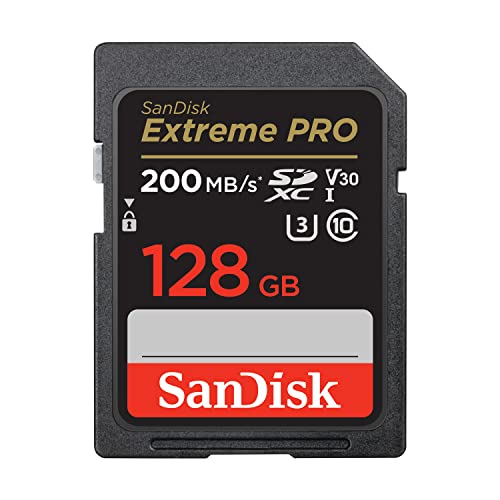
SANDISK 128GB Extreme PRO SDXC UHS-I Memory Card - C10, U3, V30, 4K UHD, SD...
$46.99
View Product Details →

