

Best Tripods For Everyday Use In 2026
🏆 Top Picks at a Glance
 #1
Best Overall
K&F Concept 64 inch/163cm Lightweight Aluminum Travel Camera Tripod
$49.99
Check Price → #2
Runner Up
CAMBOFOTO 74″ Camera Tripod, Phone Tripod for iPhone Lightweight Tripod
$33.99
Check Price →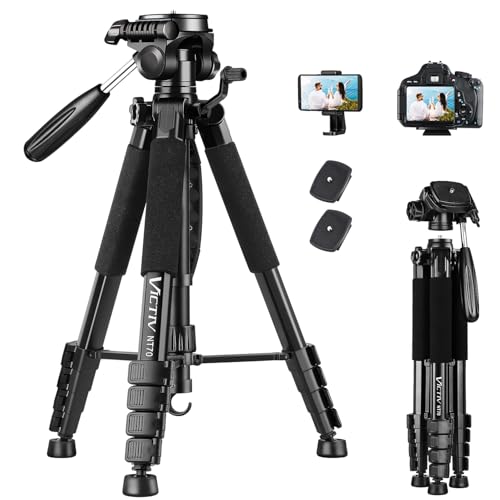 #3
Best Value
VICTIV 74” Camera Tripod, Tripod for Camera and Phone with Phone Holder
$31.99
Check Price →For everyday assignments, a tripod matters less for its tallest number than for whether it stays put, packs without a fight, and lets you change orientation without muttering at it. This roundup separates camera-oriented tripods, hybrid camera-and-phone models, and phone-first tripod/selfie-stick stands. It leans toward phone-friendly options because everyday use often includes lightweight travel, calls, selfies, and short videos; the camera-oriented picks cover travel photography and general camera support. The comparisons use published specifications and available customer feedback, with no product-specific hands-on testing.
⚡ Quick Answer: Best Tripods
Best for Travel Photography: K&F Concept 64 inch/163cm Lightweight Aluminum Travel Camera Tripod
For phones and selfie-stick use: The phone-first tripod/selfie-stick stands in this list are aimed at lightweight everyday phone setups; the camera-oriented and hybrid models are intended for camera support.
Pricing and availability may change — Check current price on Amazon →
Table of Contents
Main Points
- Match the tool to the payload. The K&F Concept 64-inch aluminum travel tripod and Amazon Basics 50-inch aluminum camera stand are the most clearly camera-oriented entries; CAMBOFOTO, VICTIV, and RISEOFLE also advertise camera use. Before attaching anything valuable, verify each model’s load rating, head design, plate compatibility, and whether the published rating applies to the actual camera-and-lens combination—not just a bare body.
- Phone-first designs prioritize convenience, not automatically rigidity. EUCOS 62-inch, VIMOSE 66-inch, SENSYNE 62-inch, and RISEOFLE 71-inch center on phone holders, remotes, and selfie-stick use; inspect the clamp’s grip, portrait/landscape adjustment, remote pairing, and leg spread before buying. If you plan to mount a phone outdoors or use a heavier camera, look for published stability and load evidence rather than assuming the shared word “tripod” means the same thing.
- Tall is useful only when it remains controlled. The 74-inch CAMBOFOTO and VICTIV, plus the 71-inch RISEOFLE, offer reach; the 50-inch Amazon Basics and 62- to 66-inch options may trade some eye-level height for an easier footprint and shorter setup. Compare maximum height with folded length, weight, leg-section count, locking hardware, and center-column behavior—because a tripod that reaches the ceiling but vibrates in a light breeze is an expensive monopod with commitment issues.
- Keep the word “TRIPOD” in its lane. The Tripod Statement homepage describes TRIPOD+AI as a 27-item checklist for transparently reporting clinical prediction-model development, validation, or updating studies, replacing TRIPOD-2015; the EQUATOR Network lists Collins et al., BMJ 2024;385:e078378, PubMed ID 38626948. That is useful context for transparent testing, but it is not evidence that any of these photographic tripods is stable.
- Demand a documented test, not borrowed authority. The supplied sources contain zero product-specific camera-tripod measurements—no load capacity, verified working height, folded length, weight, materials, head type, price, or hands-on results—and the product's 19 main items plus subitems concern biomedical large-language-model reporting, not hardware. For an honest buying decision, check separate manufacturer specifications and independent tests for those details, then weigh sharpness, vibration control, build quality, ergonomics, and repeatable setup against the price.
Our Top Picks
Affiliate disclosure: if you buy through these links, we may earn a commission at no extra cost to you.
Factors to Consider
Frequently Asked Questions
How much load capacity should a camera tripod have?
Add the camera, lens, grip, batteries, plate, flash, and accessories, then compare that total with the stated payload of both the head and the legs. Leave extra margin for long-lens leverage and off-center compositions, because a nominal weight rating does not fully describe torsional stiffness, settling, or head drift.
Is carbon fiber better than aluminum for everyday photography?
Carbon fiber usually makes more sense when you carry the tripod far or work in cold weather, while aluminum often costs less and tolerates hard knocks with fewer financial regrets. Do not assume carbon automatically means sharper images: tube diameter, leg design, center-column use, head stiffness, and how firmly you set the feet matter at least as much. Choose the material that gets you to bring the support on the jobs you actually shoot.
What height and folded length should I look for?
Aim for comfortable eye-level composition with the center column down, then check the folded length against your camera bag, vehicle, or carry-on. A very tall tripod that stays at home is less useful than a slightly shorter one you bring to every location. For low-angle work, verify the minimum height and whether the center column can be reversed or repositioned without becoming a fiddly project.
Should I buy a ball head or a three-way head?
A ball head is the quickest choice for changing framing, while a three-way head is slower but more precise when level, horizon, and product geometry matter. Choose a pan-tilt head for controlled video movement rather than because it looks professional in the product photo. Whichever style you buy, test the locks, friction control, portrait notch, plate clamp, and ability to hold a long lens without drift.
How should a tripod review or roundup document its testing?
A trustworthy roundup should state the exact camera, lens, head, plate, leg configuration, surface, height, and test conditions, then separate measured results from personal impressions.
Conclusion
For everyday photography, my recommendation is a tripod-and-head system with honest payload headroom, eye-level height with the center column down, leg locks you can operate without ceremony, and a folded size you will actually carry. The supplied TRIPOD sources cannot identify a photographic winner—there are zero product-specific camera-tripod measurements—so buy from documented specifications and independent tests, not from the most confident adjective on the box.


